Plaster Ceiling Hole Repair Malaysia: Patch, Repair or Replace?
Isi Kandungan

Introduction
Yes, a hole in your plaster ceiling does not always mean you need to replace the whole ceiling.
Sometimes a simple patch is enough. Sometimes the damaged section needs a more proper repair. And sometimes replacement is the safer and smarter option.
That is where many homeowners in Malaysia get stuck.
At first, the damage may look small. But the real question is not only how big the hole looks. The bigger question is:
what caused it?
is the board around it still strong?
was there water damage?
is the ceiling already sagging or cracking nearby?
That is why the right fix depends on the actual condition of the ceiling — not just the hole itself.
Plaster Ceiling Hole Repair Malaysia: Quick Answer
If you want the shortest answer, here it is:
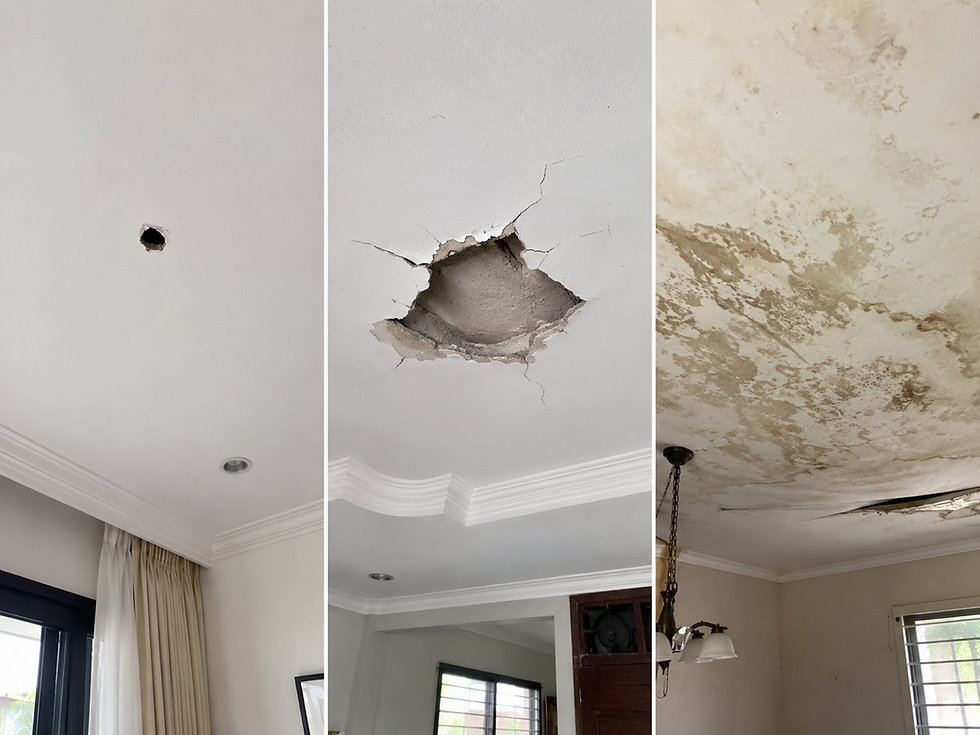
Patch if the hole is small, localised, and the surrounding board is still dry and solid
Repair if the damaged section is bigger, cracked, or needs cutting and replacing in one area
Replace if the ceiling has serious water damage, sagging, repeated leakage, mould risk, or too many weak sections
Your own current plaster ceiling content also takes the same practical position: small local holes may be patched, but larger or leak-damaged sections often need a more proper repair, and repeated or widespread damage may justify replacement instead. (plasterceiling.my)
What Usually Causes a Hole in a Plaster Ceiling?
A hole in the ceiling usually does not happen randomly.
Common causes include:
previous water leakage
aircond piping or installation work
electrical hacking or wiring access
accidental impact from maintenance work
weakened board from age or moisture
Your Cheras ceiling-repair article also highlights leaks, bulging, and crack-related damage after heavy rain as common reasons plaster ceilings deteriorate in Malaysian homes. (plasterceiling.my)
This matters because the cause often affects the right repair method.
For example:
a small installer-made cutout may only need patching
a wet, soft, stained ceiling may need section repair or replacement
recurring leak damage usually means the source problem must be solved first

When a Patch Is Usually Enough
A patch is usually the best option when the damage is:
small
dry
localised
not spreading
surrounded by firm board
Examples include:
a minor access hole from wiring work
a small accidental puncture
a small cutout where the surrounding area is still stable
In cases like this, the contractor may be able to:
trim the damaged area neatly
fit a patch piece
tape and compound the joint
sand and repaint the section
That is usually the most cost-effective solution when the ceiling around the hole is still in good condition.
When a Proper Repair Makes More Sense
Sometimes the issue is too large or too weak for a simple patch, but still not bad enough to replace everything.
A more proper repair usually makes sense when:
the hole is medium-sized
the surrounding plaster board has cracks
one section has visible water staining
the affected area needs to be cut back and re-boarded properly
In these cases, the repair may involve:
removing the damaged section
checking the frame above
replacing one ceiling panel area
re-finishing the joint
repainting the repaired zone
This is often the middle-ground option: more solid than a quick patch, but less extreme than replacing the whole ceiling.
When Replacement Is the Smarter Choice

Replacement is usually the better option when the problem is not just “one hole.”
You should think more seriously about replacement if there is:
sagging ceiling board
repeated water leakage
soft, swollen, or mould-affected sections
multiple cracks near the hole
large areas of weakened board
recurring damage in the same zone
Your own crack-repair article also points to the same practical threshold by asking when it is time to replace the whole plaster ceiling instead of repairing smaller visible problems one by one. (plasterceiling.my)
If the board has already lost strength, patching one spot may only hide the problem temporarily.
Did You Know?
Your own 2026 Malaysia-facing content already notes that plaster ceiling hole repair can start from around RM150 for smaller repairs, while design and broader ceiling work can vary a lot depending on section size, leak damage, and finishing complexity. That is why the cheapest option is not always the best long-term choice if the surrounding board is already weak. (plasterceiling.my)
How to Decide What Your Ceiling Really Needs
Before choosing patch, repair, or replace, look at these points:
1. Is the cause already solved?
If the hole came from a leak and the leak is still active, repairing the ceiling alone will not solve the real problem.
2. Is the surrounding board dry and strong?
If the board feels soft, stained, or crumbly, patching may not last.
3. Is the damage only in one spot?
One clean small area is very different from several cracks, stains, and sagging sections nearby.
4. Will the finish still look acceptable?
Sometimes a patch is structurally okay, but homeowners want a cleaner final look. In those cases, broader repair may give a better result.
5. Is this an old recurring problem?
If the same area keeps failing, replacement often becomes more practical than repeated patching.
Internal link suggestions:
How to fix a hole in your plaster ceiling DIY or call a pro Malaysia 2026 guide
Repair siling plaster retak KL: punca, cara baiki & kos pembaikan 2026
Plaster ceiling repair in Cheras 2026: how to stop water leaks after heavy rain
Plaster ceiling service Malaysia 2026 price guide
Conclusion
If you have a damaged ceiling, the best answer is not always “replace everything.”
In many Malaysian homes:
patch works for small and dry local holes
repair works better for damaged sections that need stronger restoration
replacement is smarter when the ceiling is already weak, wet, sagging, or repeatedly failing
The key is to fix the real condition of the ceiling — not just cover the visible hole.
FAQ
1. Can a plaster ceiling hole be patched?
Yes, if the hole is small and the surrounding board is still strong, dry, and stable.
2. When is patching not enough?
Patching is usually not enough when there is water damage, sagging, soft board, or wider cracking around the damaged area.
3. Should I replace the whole plaster ceiling for one hole?
Not always. Many cases only need a patch or section repair. Full replacement is usually more relevant when the ceiling has widespread damage.
4. What if the hole came from a leak?
The leak source should be fixed first. Otherwise, the same ceiling problem may return.
5. How do I know whether to repair or replace?
The main things to check are the cause, the condition of the surrounding board, the size of the affected area, and whether the problem keeps coming back.
Get Professional Plaster Ceiling Repair with Plaster Ceiling Malaysia
Need help deciding whether your ceiling should be patched, repaired, or replaced?
Plaster Ceiling Malaysia helps homeowners and property owners with practical plaster ceiling solutions, including ceiling hole repair, crack repair, section replacement, and broader ceiling work in Malaysia.
Why customers choose us:
✅ Help for ceiling holes, cracks, stains, sagging, and leak-related damage
✅ Suitable for homes, offices, and commercial premises
✅ Practical recommendations based on the actual ceiling condition
✅ Easier to avoid repeated repair mistakes by choosing the right fix early
📲 Contact our team today to request an inspection, ask about repair options, or get a quotation.